De la Silla de Coaliciones
Familia, welcome back!
To our first-years beginning a brand-new chapter at Yale, to everyone returning to campus, and to all of you who continue to follow and support Despierta Boricua: welcome to a new year.
We took a long, much-needed summer break, but we were far from quiet. Behind the scenes, we've been working on some of our biggest ambitions yet, building new relationships, and imagining what DB can become.
Now campus is alive again, and so are we.
Something… huge is in the air.
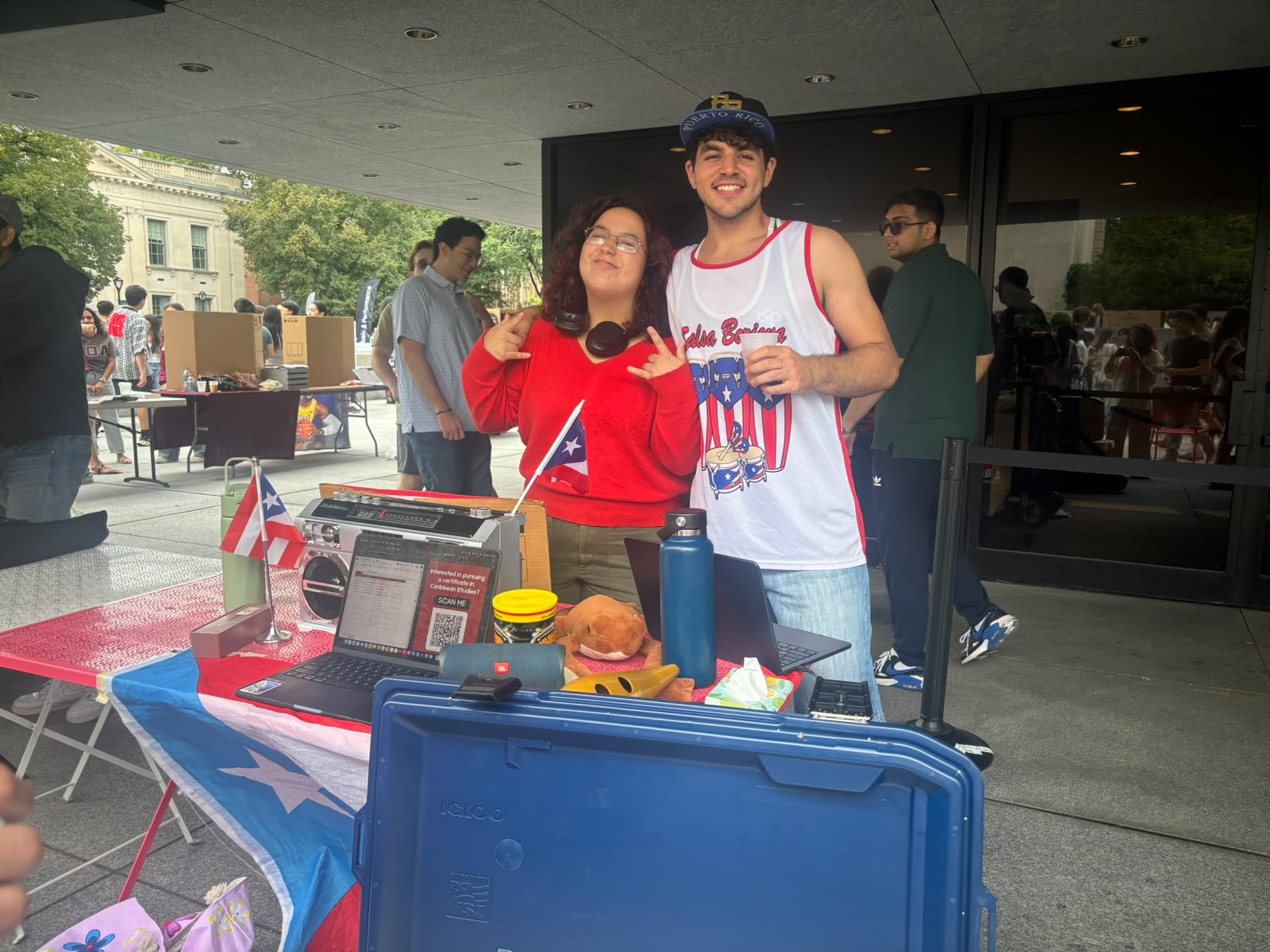
The Puerto Rican Futurity ConferenceLa constelación
This summer, one of our biggest ideas stopped being just an idea.
The conference has a home and a date. Put it in your calendar now: May 2027, at CENTRO — Centro de Estudios Puertorriqueños at Hunter College, the premier research institution for Puerto Rican Studies, in partnership with the NEA's 20+ campuses.
Save the date
Estamos Aquí
Puerto Rican Futurity Conference
Mayo 2027 · CENTRO, Hunter College · En alianza con la Northeast Alliance
Developed in partnership with CENTRO — Centro de Estudios Puertorriqueños, Hunter College
And over the summer, we completely rebuilt the conference itself.
The conference will be organized around a constellation of related issues that focus on the youth: different areas of work happening at the same time, speaking to one another, and refusing the idea that we have to wait our turn.
It will revolve around four major clusters.
-
EducaciónCluster I
The future of Puerto Rican education: the cuts facing UPR, higher-education access, student organizing, brain drain, and what it would actually take for more young Puerto Ricans to stay, return, and build lives on the archipelago.
-
PractitionersCluster II
People doing the work directly. Organizers, researchers, engineers, workers, and experts in energy, water, food sovereignty, climate, infrastructure, and housing.
-
MultigeneracionalCluster III
Real conversations between generations. Not an elder giving a keynote while students listen quietly, but organizers from the '70s, '80s, and '90s sitting across from students today and asking each other what has changed, what has not, and what comes next.
-
ImaginaciónCluster IV
Puerto Ricans — especially the youth — have become extremely good at explaining everything that is wrong. Colonialism. Debt. Displacement. Corruption. Austerity. Brain drain. Climate vulnerability. We know the vocabulary of crisis very well. But what would it look like to become as serious about imagining what could be right? What kind of Puerto Rico are we actually trying to build? What institutions would it need? What would education look like? Energy? Housing? Culture? Community? What would have to exist for the next generation not simply to inherit the same problems with better language for describing them?
That is the question behind the conference. And now we get to build it.
Lo que necesitamos de ustedes
This is where alumni matter more than anyone.
Practitioners — if you work in energy, water, food systems, housing, climate, or infrastructure, on the island or in the diaspora, we want you in the second cluster.
Elders — if you were organizing in the '70s, '80s, '90s, the multigenerational track is yours. We are not asking you to give a speech. We are asking you to sit across from a 19-year-old.
Connections — you know someone we don't. Send us their name.
Caribbean StudiesArchipiélagos, Mares y Diásporas
This summer, we found something in Yale's archives that made this project feel a little different.
Yale has been asked for Caribbean Studies before, in variations.
In 1973, CENTRO's founding director Frank Bonilla wrote directly to Yale President Kingman Brewster supporting Despierta Boricua's push for Puerto Rican Studies. A full proposal followed in 1974. Later came a Chicano/Boricua Studies concentration (1982), seminars, individual courses, and decades of students trying to build pieces of an education that Yale never quite institutionalized.
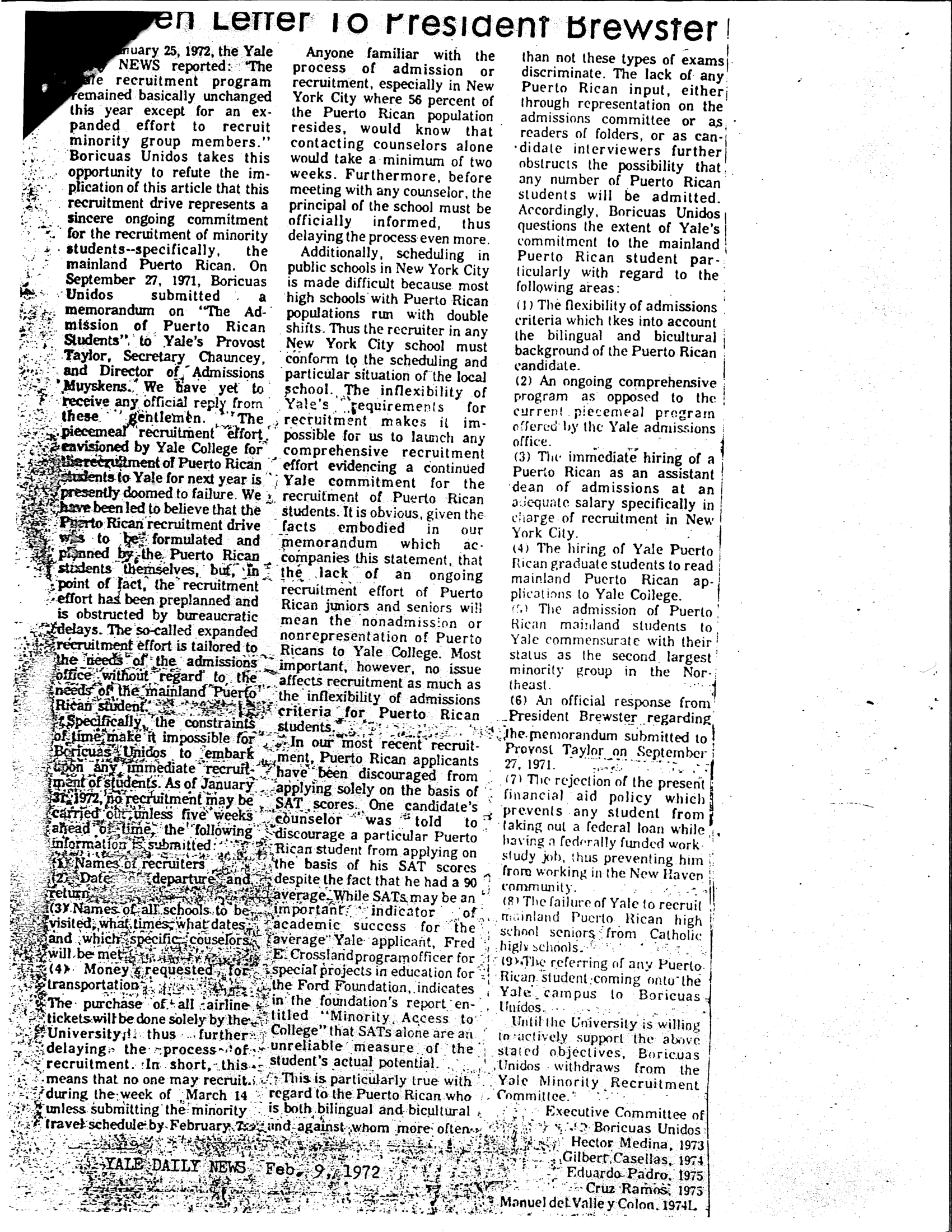
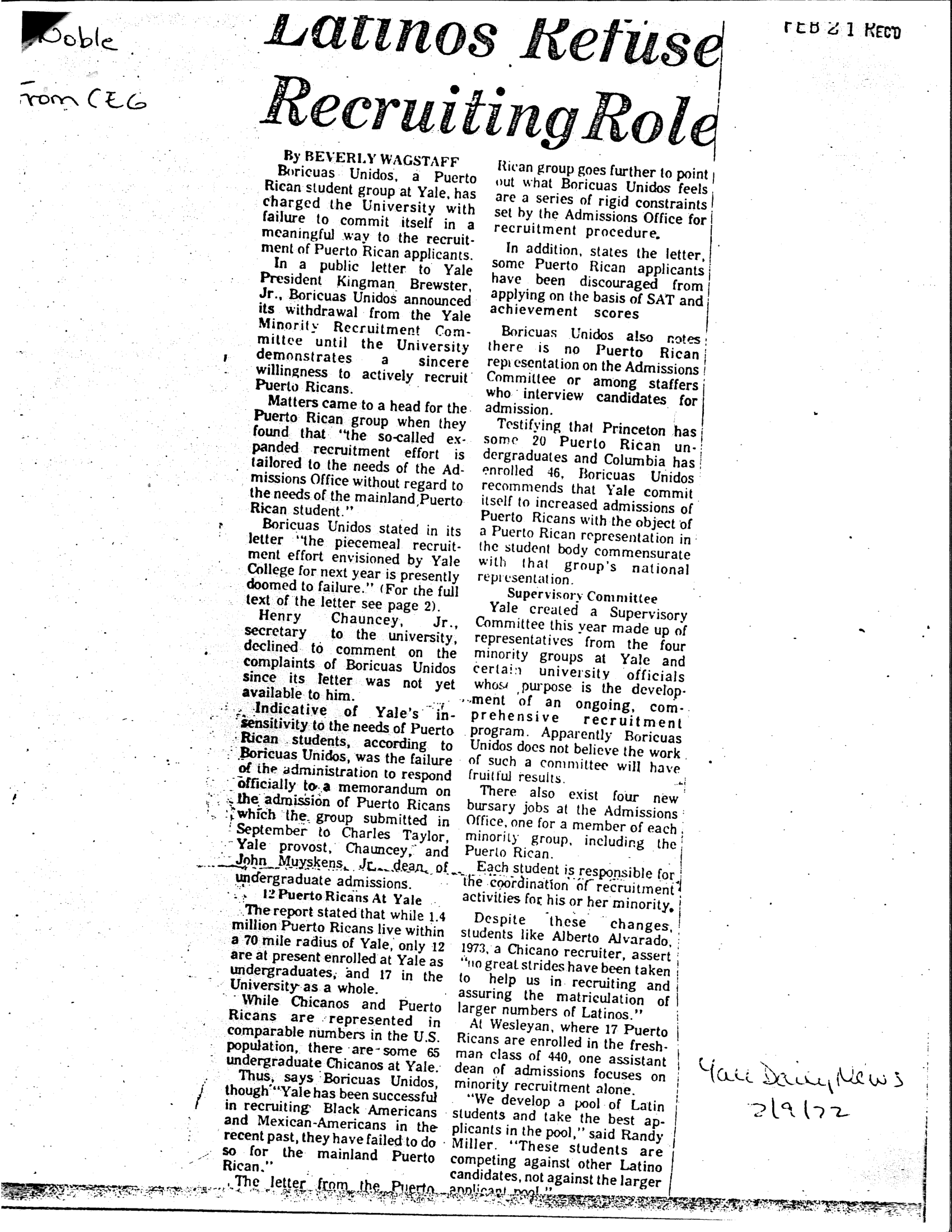
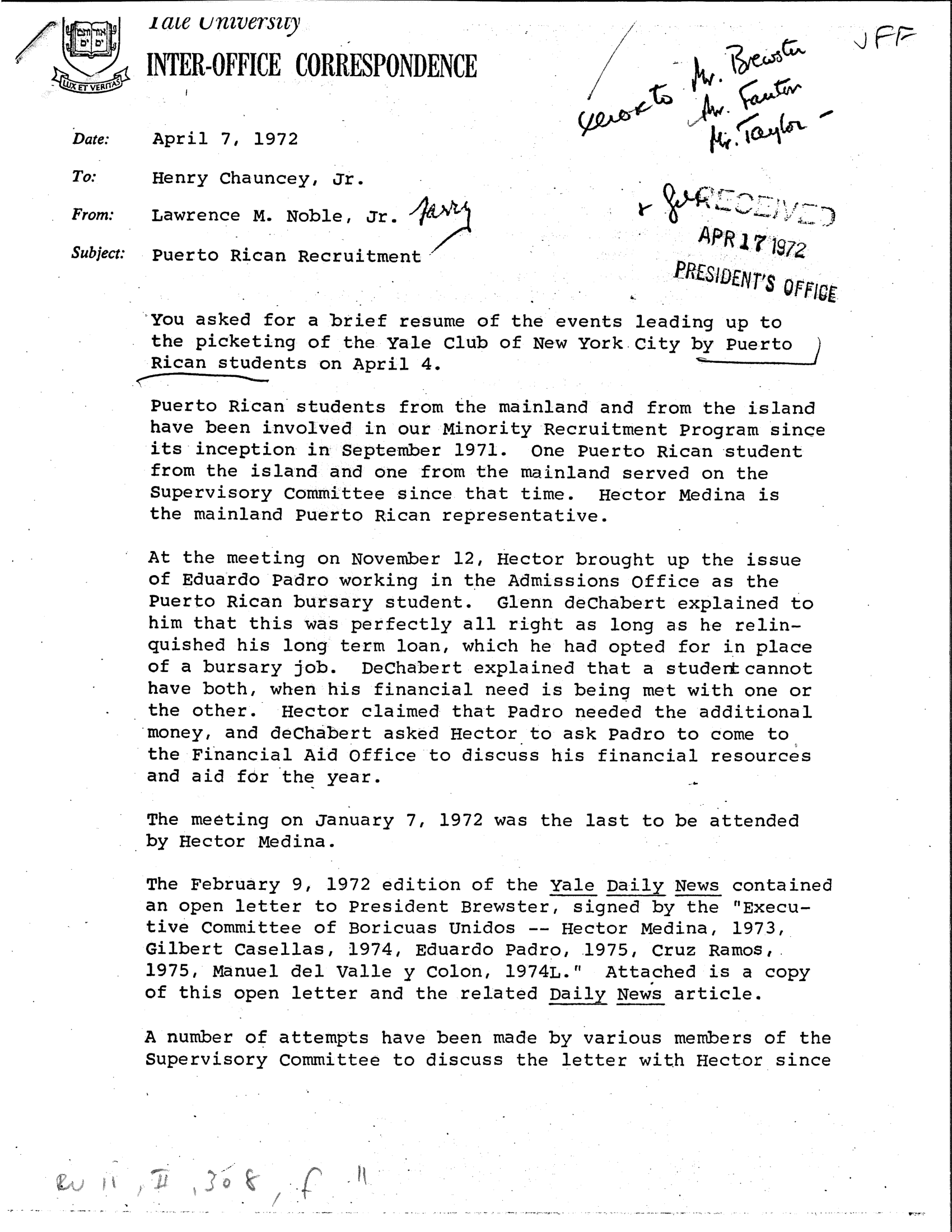
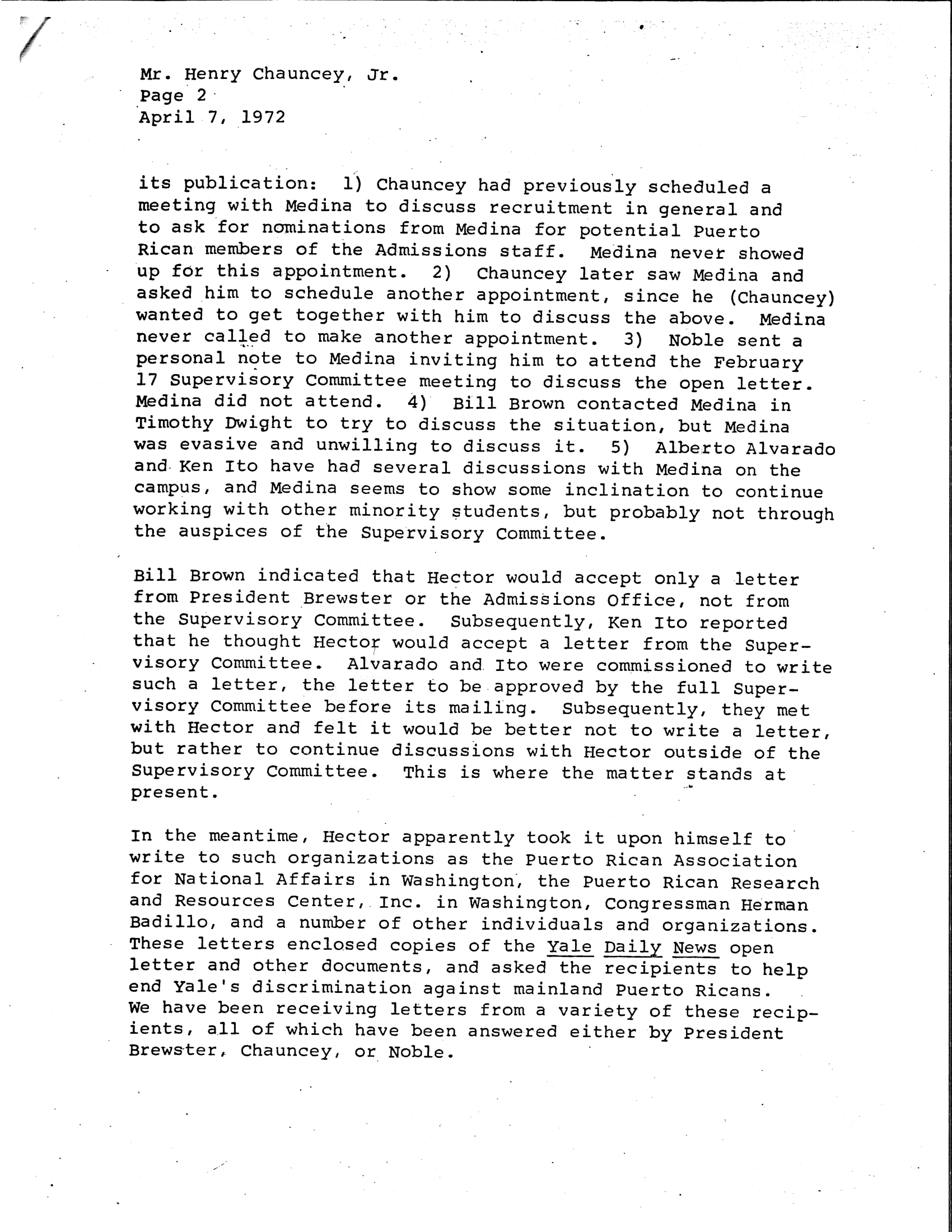
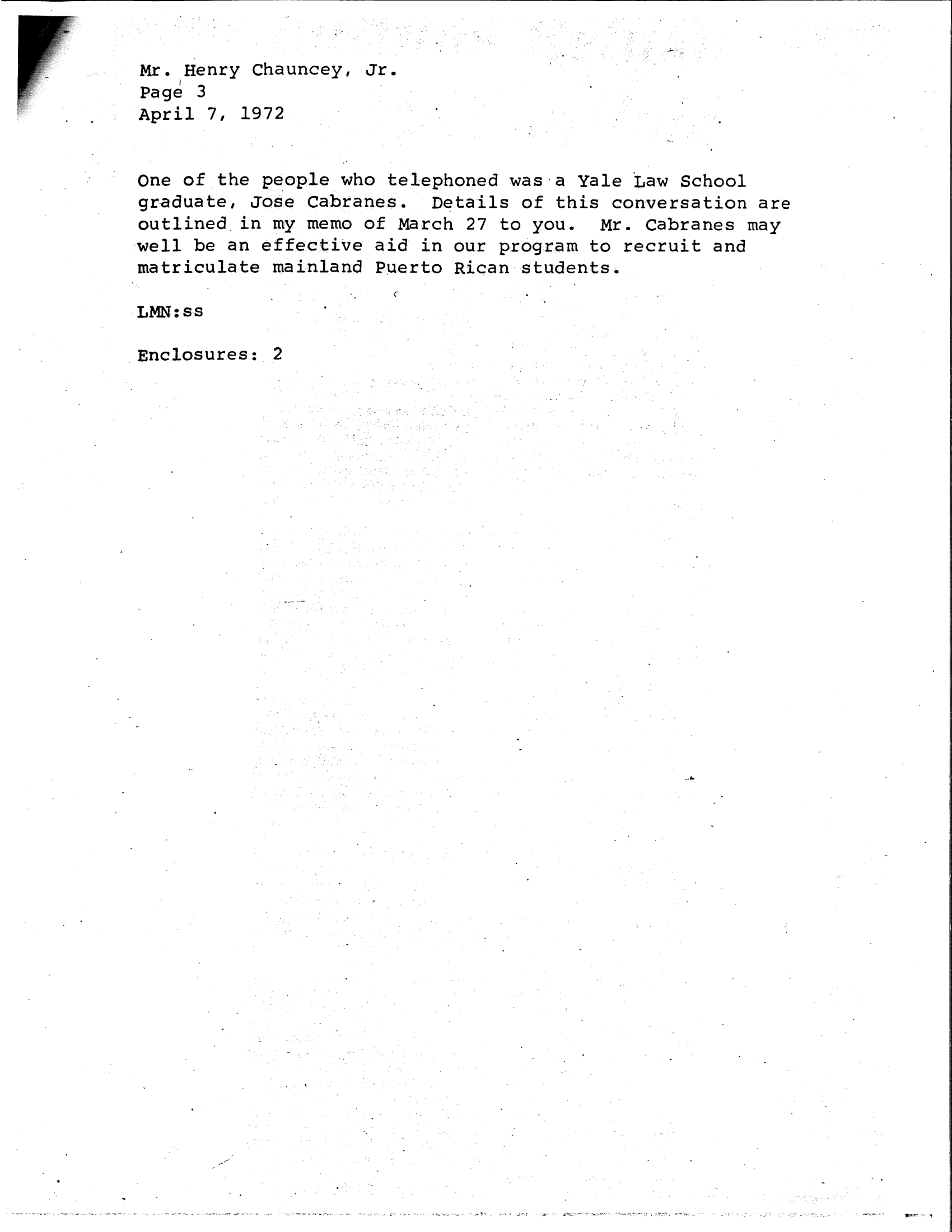
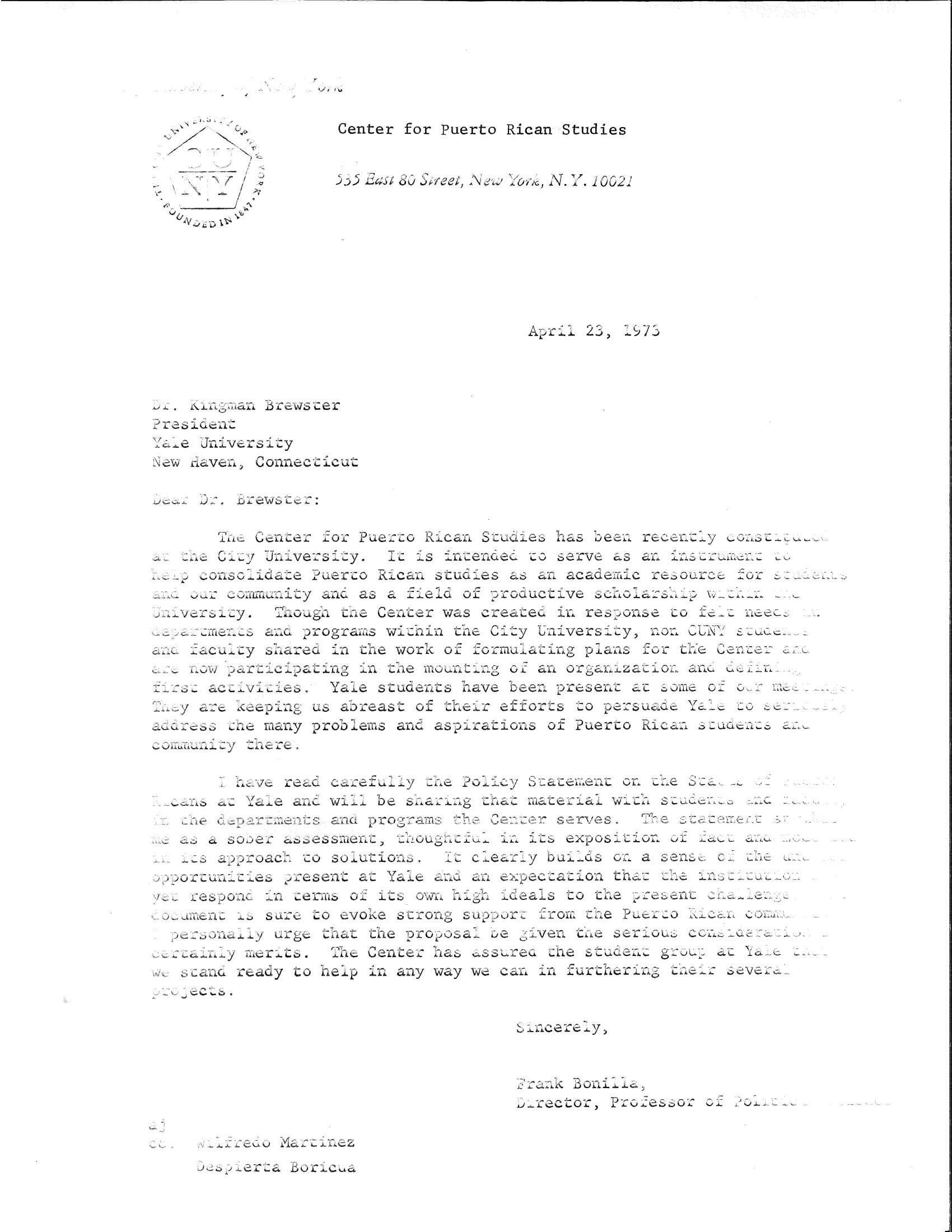
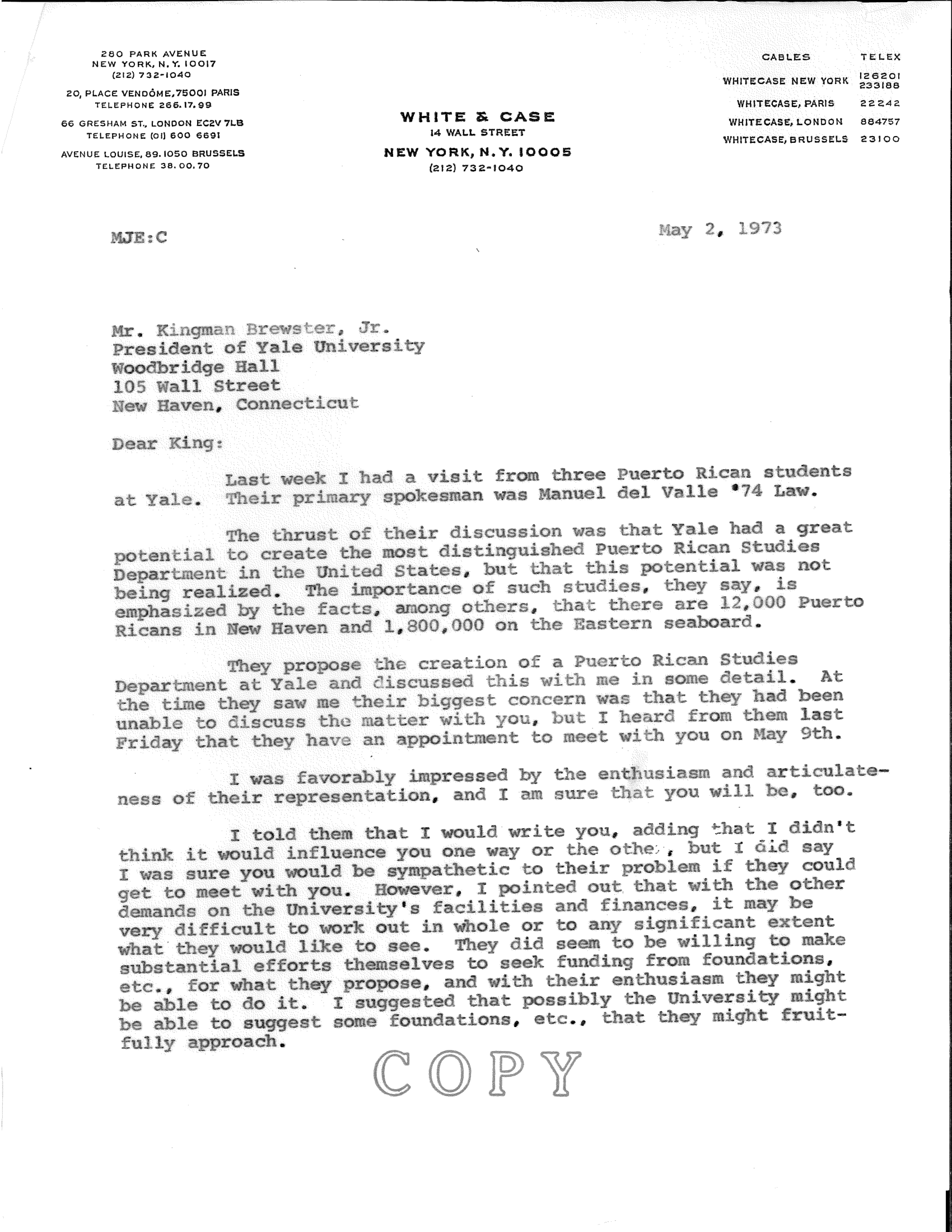
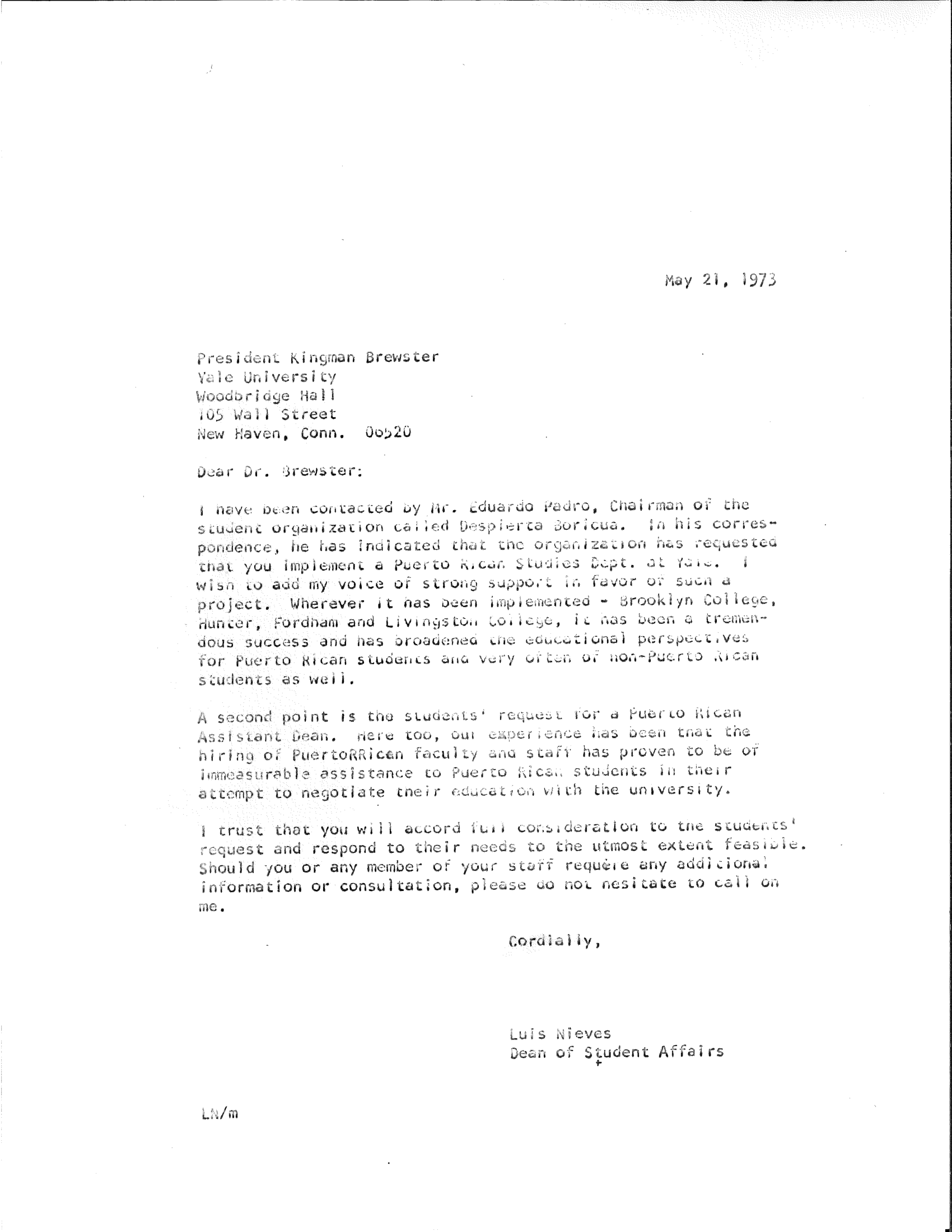
Fifty-two years later, we are asking again. Slide through the pages, or swipe on your phone.
Fifty-two years later, we are asking again — and this time we are asking with larger support.
Our argument is bigger than simply saying Yale should offer more Caribbean classes.
The Caribbean is not a subsection of Latin America.
A framework centered on Spanish and Portuguese cannot adequately contain Haiti, Jamaica, Trinidad, Martinique, Curaçao, or the wider Anglophone, Francophone, and Dutch Caribbean. And separating Puerto Rico into one department, Haiti into another, Cuba into another, and Jamaica somewhere else obscures the histories that connect them: slavery and emancipation, colonialism, migration, language, race, revolution, environment, diaspora, and the sea itself.
Even more importantly: the Caribbean is too often taught as the object of someone else's history. Haiti becomes a story about France or U.S. intervention. Cuba becomes a Cold War story. Puerto Rico becomes a problem of U.S. territorial policy.
We want students to encounter the Caribbean as a subject — with its own thinkers, political traditions, intellectual debates, scientific questions, literatures, communities, and ways of understanding the world.
Caribbean futurity is being shaped in laboratories, clinics, coastlines, farms, archives, and classrooms: climate science, public health, energy, food sovereignty, environmental justice, migration, history, literature, and political thought all belong in the same conversation. Yale already has much of this work. What it lacks is the undergraduate structure connecting it.
We are working with faculty and student groups in preparing to submit the Certificate in Caribbean Studies: Archipelagos, Seas, and Diasporas to Yale's Committee on Majors this December.
The groundwork is increasingly real: Kaiama Glover and Alex Gil Fuentes as proposed co-directors; a faculty advisory board spanning multiple departments; more than a dozen doctoral students involved; partnerships with CENTRO, the CUNY Dominican Studies Institute, the CUNY Haitian Studies Institute, and UConn's Puerto Rican Studies Initiative; and more than two dozen eligible Yale courses already on the books.
In other words:
- The faculty exist.
- The courses exist.
- The archives exist.
- The students exist.
What does not yet exist is the name, structure, and permanence. That is what we are asking Yale to provide.
A certificate puts Caribbean Studies into the catalog, onto transcripts, into advising, and eventually into the institutional memory of the university. DB graduates. Students graduate. A curriculum can outlive us.
And after fifty-two years, we think Yale has had enough time.
Lo que necesitamos de ustedes
The proposal is built. Now we need to show Yale the demand is there too.
-
Sign the petition — everyone can sign
Undergraduates, graduate students, faculty, staff, alumni, friends of the program — if you believe Yale should establish a Certificate in Caribbean Studies, add your name. The petition is our clearest way of showing the Committee on Majors that this is not a niche request from a handful of students. It has a community behind it.
📣 Sign the petition -
Current & former students — fill out the survey
We are collecting your academic history to see how many students have already taken enough Caribbean-focused courses that they may effectively pre-qualify for the certificate today. We also want to know: would you (have) pursue(d) it? How valued would it be to your education? What have you struggled to find? What should this program actually look like? That information becomes evidence that students are already building a Caribbean Studies education without a formal program to recognize them.
📋 Take the student survey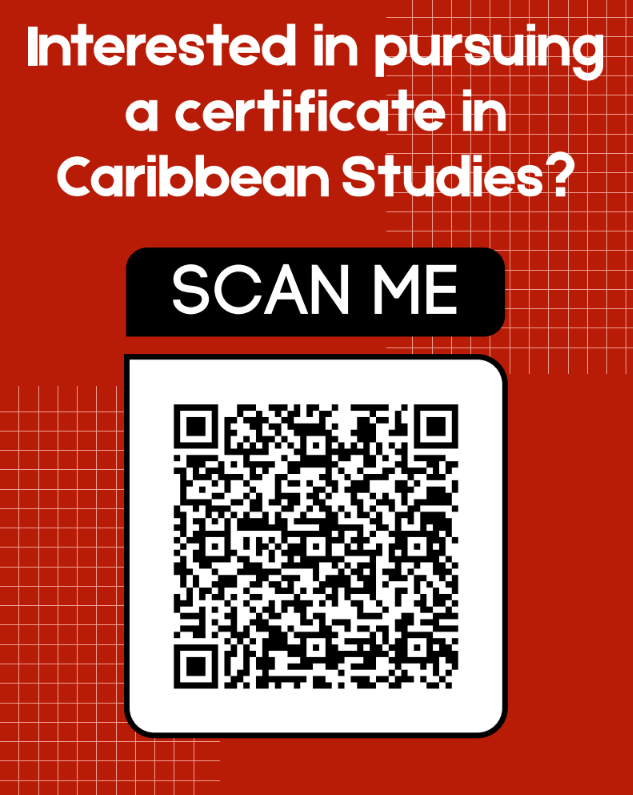 Or scan me for petition
 -
Read what we're asking Yale to approve
Read it. Critique it. Send us feedback. Share all three links.
📄 Read the full proposal
We are not asking Yale to invent a field that does not exist here.
El PeabodyLo que Yale tiene
This project has moved further than we were ready to publicly say even a few months ago.
Over the summer, DB worked to understand the scale of Yale's Puerto Rican archaeological collections, including material collected through expeditions led by Froelich Rainey in 1934 and Irving Rouse in 1936 and 1938 across Puerto Rico, Vieques, and Mona.
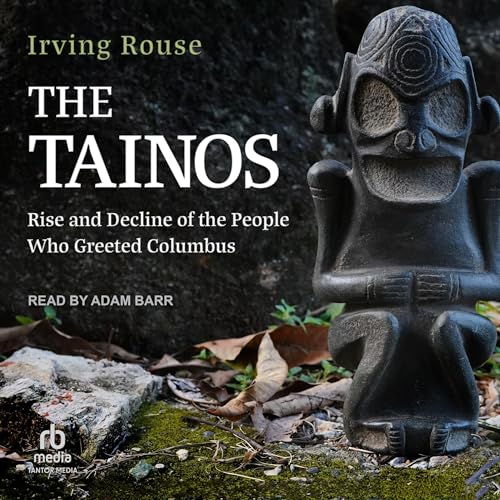
And Yale has now confirmed something fundamental: the Peabody holds Taíno-affiliated ancestral human remains.
They are fragmentary remains, not a complete individual, but that distinction does not change the ethical question in front of us.
There is also now a clearer path forward, after many caveats.
There is also now a clearer path forward, after many caveats.
Puerto Rico falls outside the legislative geographic reach of NAGPRA; the federal repatriation process available to federally recognized Native nations does not automatically apply here. Recognition alone cannot fix that; the problem is written into the statute's jurisdiction.
But that does not mean Yale is powerless to act.
The Peabody can pursue a voluntary, non-NAGPRA repatriation through its own human-remains and repatriation process. Yale has indicated that it can consider a return once an appropriate request is brought forward — and that consultation could potentially include support for travel, examination of the collection, community consultation, and ultimately the transportation of ancestors or belongings.
So the question has changed. We are no longer asking only: "Can repatriation happen?" We are now asking: "Who should rightfully participate in deciding how it happens, and where should the ancestors go?"
There is no single organization that can simply declare itself the representative of all Taíno people. As Jeannie Karaya has emphasized throughout these conversations, legitimacy has to come from relationships, consultation, and process — not from pretending that one organization speaks for everyone.
The work now is toward a narrow Taíno consultation and repatriation body capable of bringing multiple voices into that process, including organizers and representatives connected to ¡Taíno Vive!, Higüayagua, UCTP, Borikén, and the diaspora, alongside scholars and others with relevant knowledge.
DB is not the community of descent. We are not trying to become the authority here. Our role is to research, connect people, use our access to Yale, and help create the conditions in which the people who should have authority can exercise it.
Despierta Boricua
And there is a bigger issue underneath all of this: Taíno people were declared extinct for generations while their ancestors were excavated, catalogued, studied, and stored in institutions far from the Caribbean. They were treated as a disappeared people precisely while museums accumulated the material evidence of their existence.
Repatriation cannot undo that history, but Yale does have a choice about whether it continues it.
For us, this is not simply about museum policy. It is about dignity, burial, historical responsibility, and the right of living communities to participate in deciding what happens to their ancestors.
The legal pathway may be complicated; the moral question is much simpler.
La Casa at 50
La Casa Cultural de Julia de Burgos turns 50.
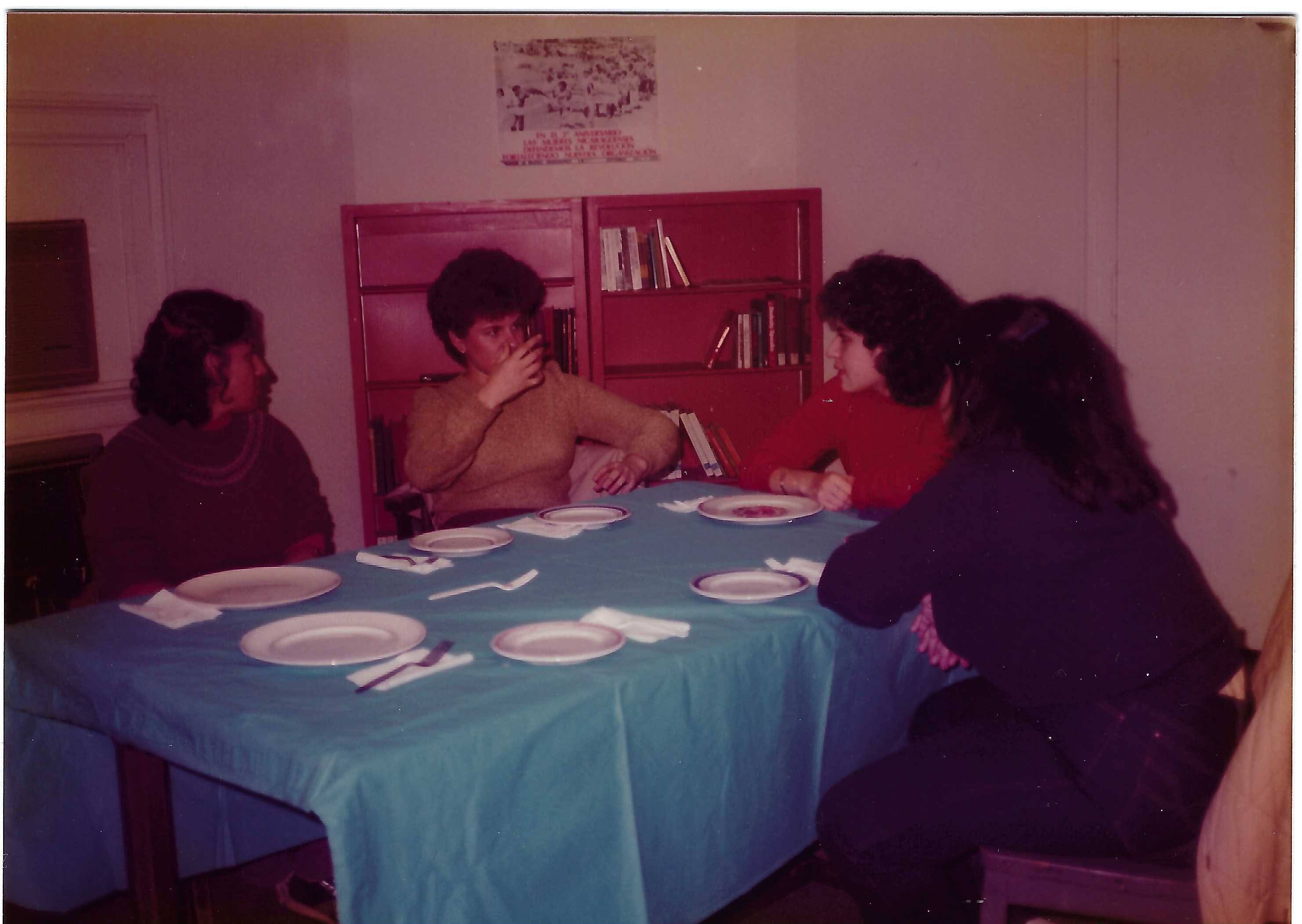
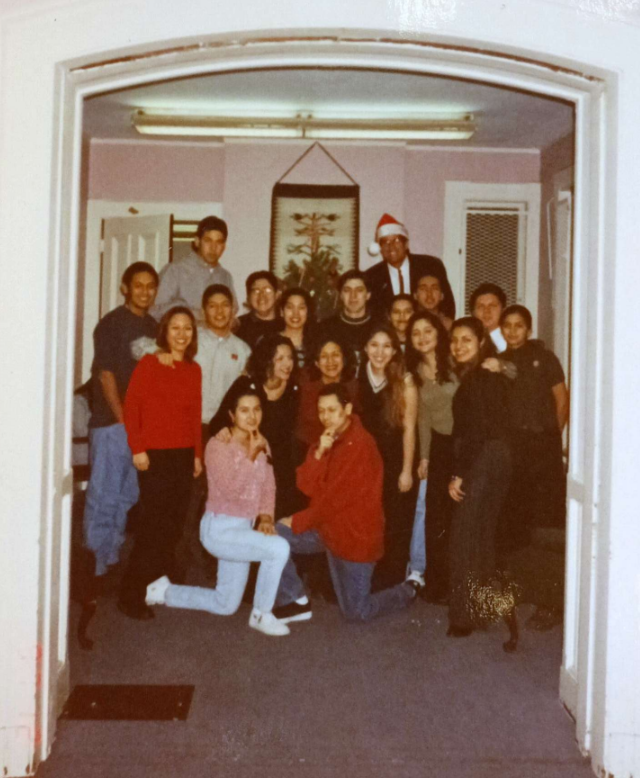
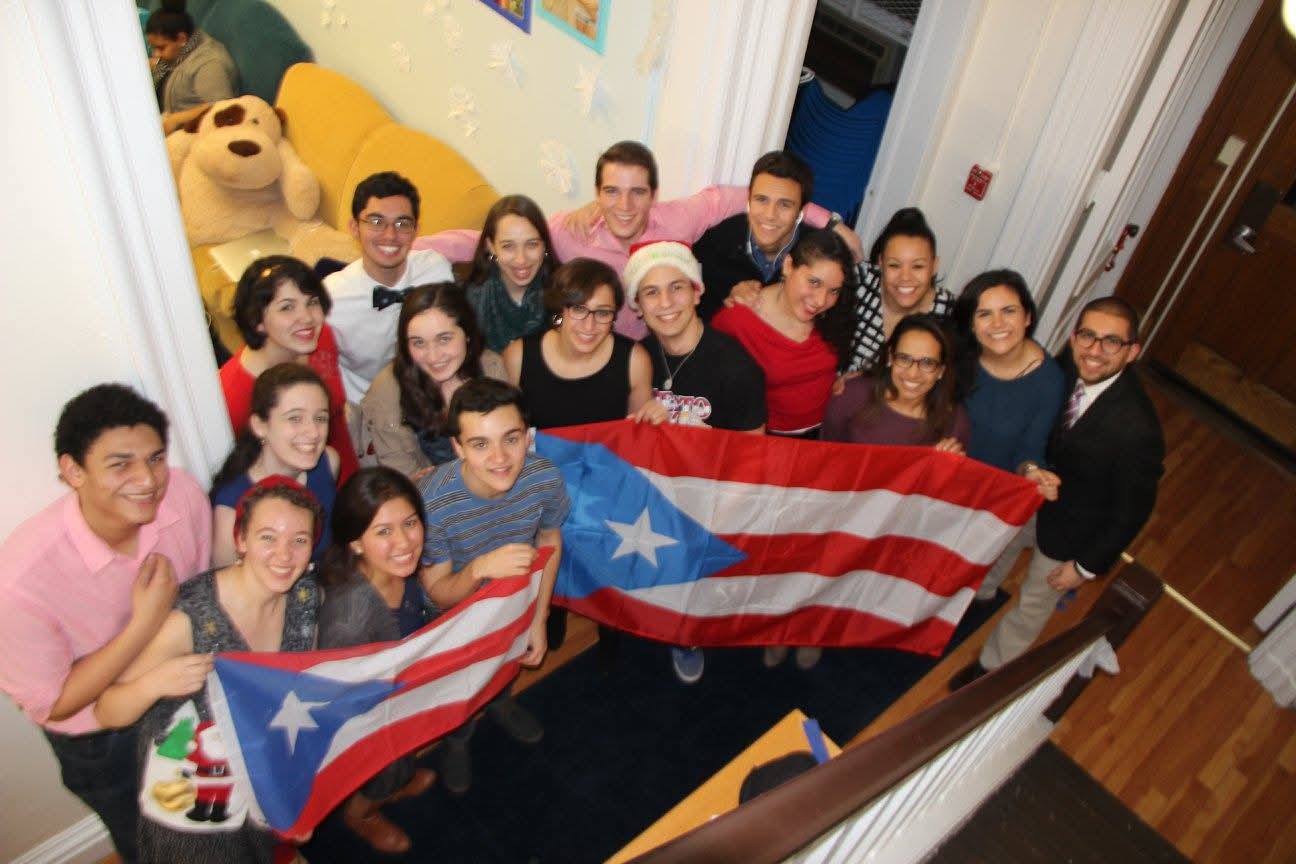
Five decades of Puerto Rican and Latino students building community, making culture, organizing, arguing, dancing, studying, and creating a home inside Yale.
For DB, that anniversary is not just about looking backward. It is also a challenge: what should the next fifty years of La Casa look like?
We want to honor the people who built this space before us while also expanding what it can be — a cultural home, an intellectual home, a place for political education, a center for coalition-building, and a space where Latino and Caribbean students can actually imagine projects together.
So naturally, we have plans.
The Sneak PeekLo que se cocina este semestre
We have a lot cooking this semester: some cultural, some political, some academic, and some just meant to bring people together.
Cultura, arte y memoria
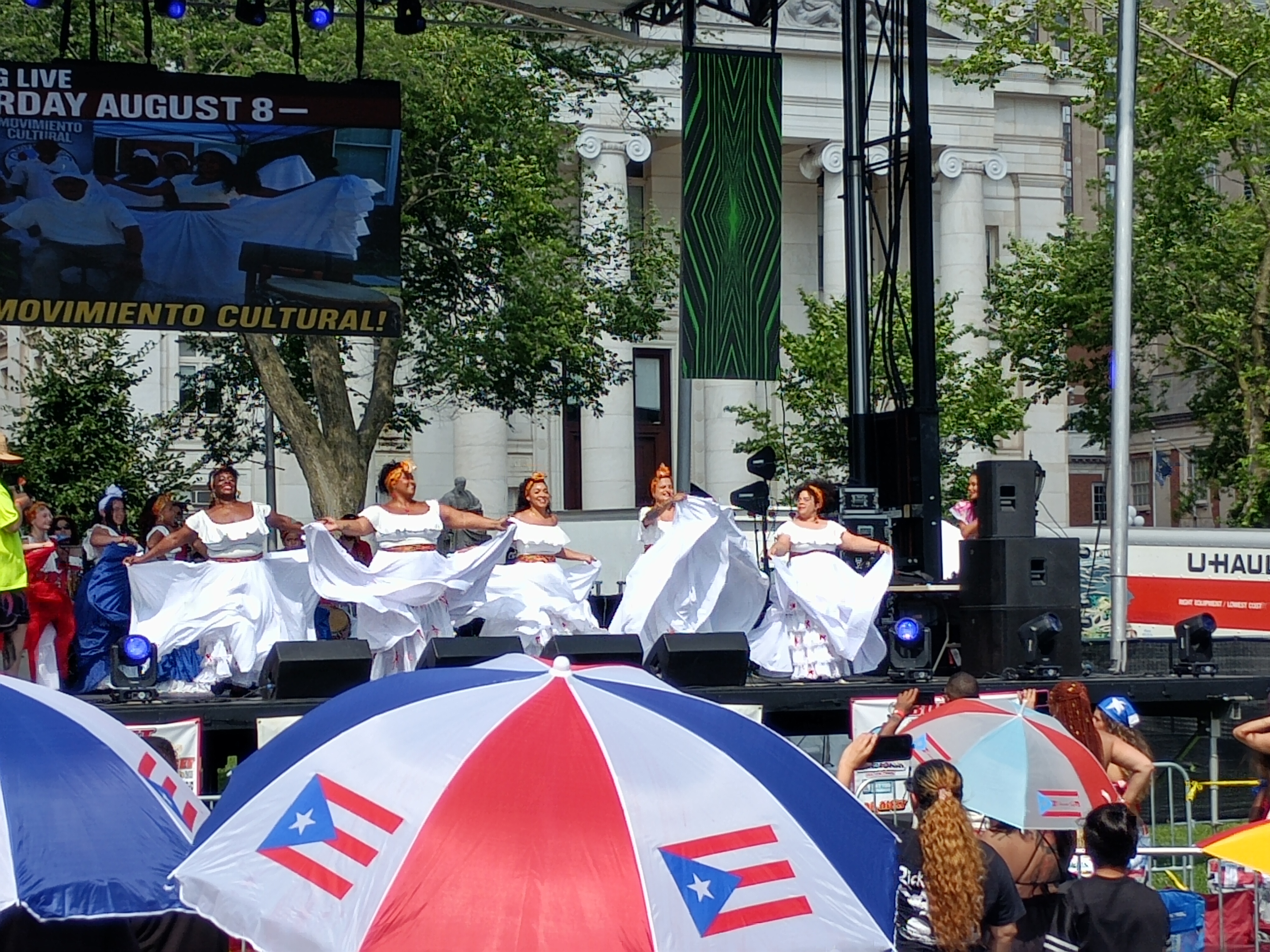
Bomba at Schwarzmanwith Movimiento Cultural
We are working with Movimiento Cultural on a bomba collaboration at Schwarzman Center — bringing Afro-Puerto Rican music, rhythm, dance, and history into one of Yale's biggest shared spaces. Bomba is a tradition built through conversation: between drummer and dancer, between generations, and between community and history. We want Yale to experience that conversation.
Kite-making + vejigante maskswith Arte Inc. and New Haven youth
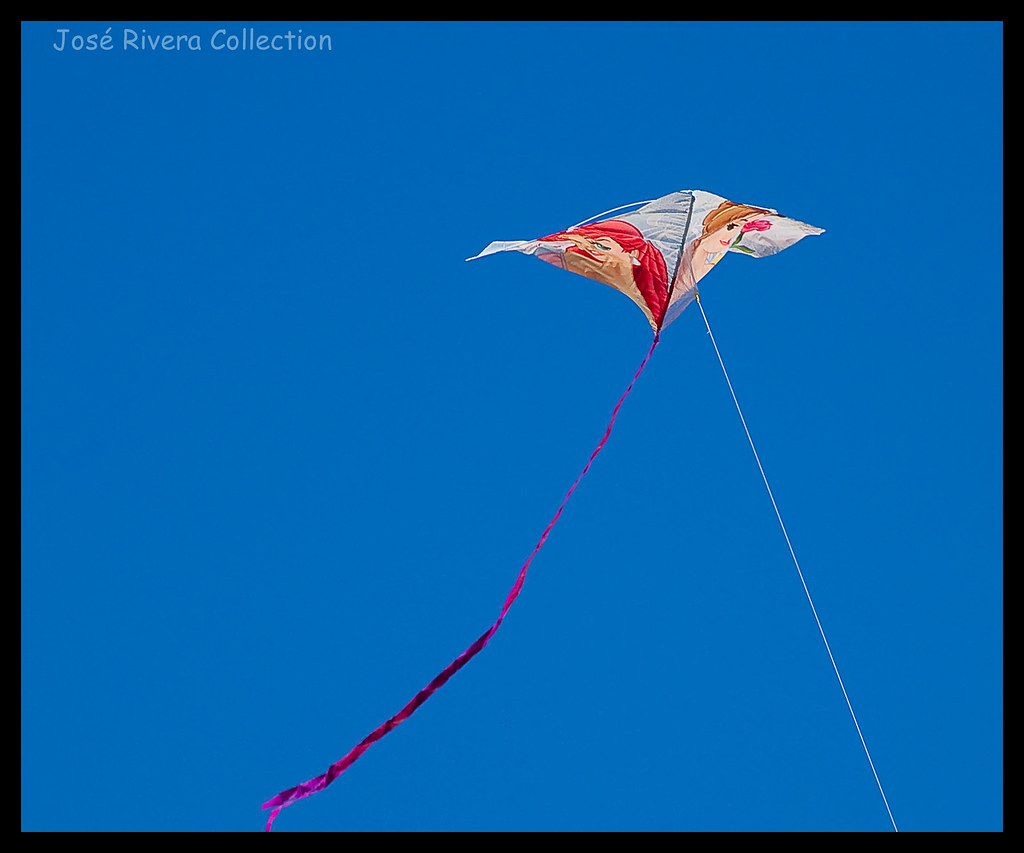
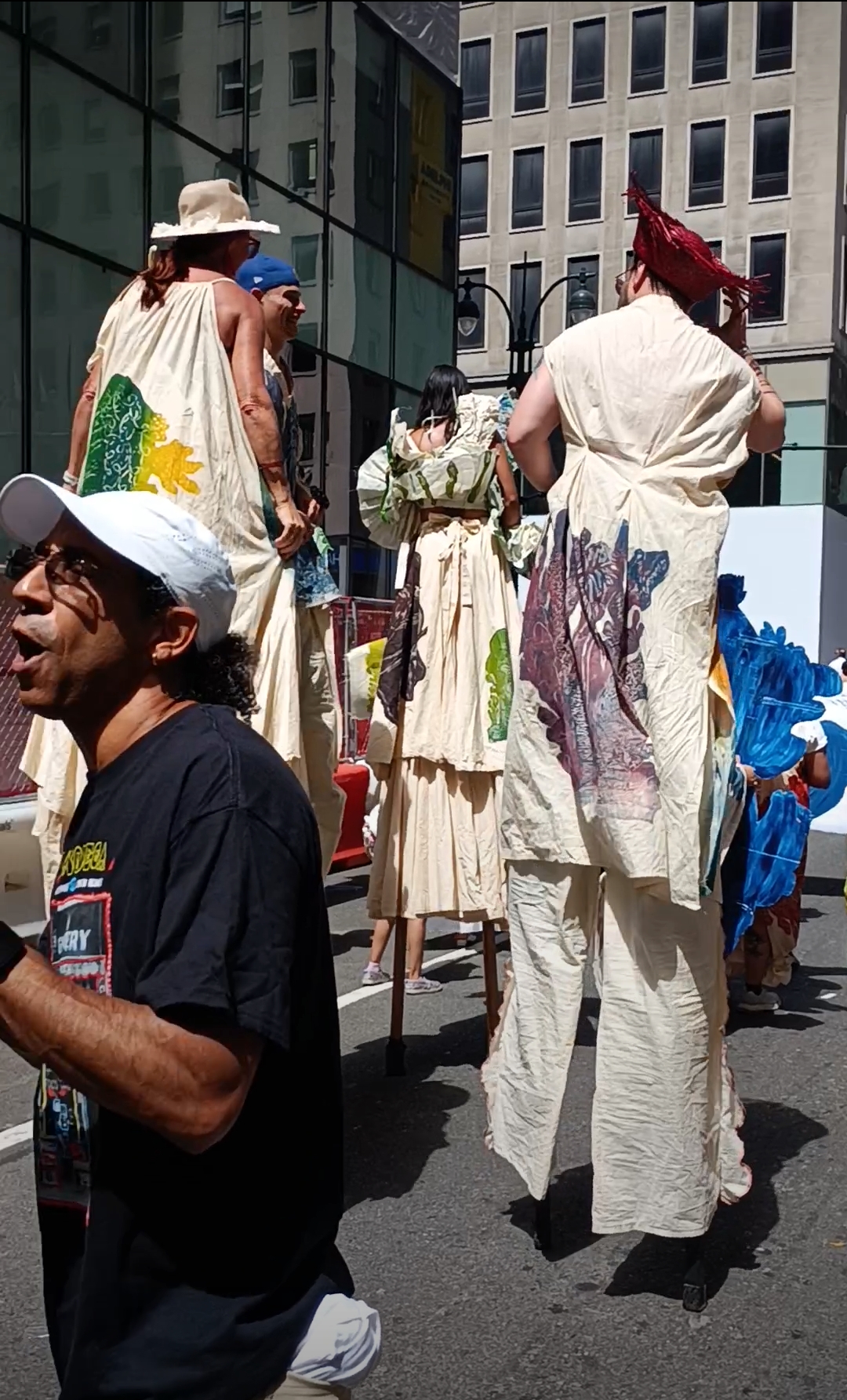
We are also planning hands-on cultural workshops with Arte Inc. and young people from New Haven. Think kite-making, vejigante mask-making, art, history, and intergenerational community-building — not culture behind glass, but culture you actually make with your hands.
Graffiti workshop… maybe 👀
And one more thing we are playing with: a possible graffiti workshop exploring street art, lettering, political expression, and the visual language of Puerto Rican and Latino urban culture. Still cooking. But you know us — we have ideas.
Política, historia y conversación
La Urnavoter registration + civic power
This fall, we are planning a voter-registration and civic-engagement event at La Casa with Juan Candelaria, alongside campus partners. Expect practical help with registration, absentee ballots, state-specific voting questions, and civic resources — but also a larger conversation about what political participation can and cannot do. Voting is not the entirety of political power, but knowing how to use the systems is part of it. We want La Casa to be a place where civic engagement happens.
DB × MEChA × DECO documentary screening
DB, MEChA, and DECO are planning a documentary screening centered on the Puerto Rican diaspora and/or broader Latine activism, followed by a community conversation. The point is not just to watch something together. We want the screening to become a starting point for talking across movements, histories, and communities.
DB goes to CENTRO
This fall, the DB board is planning a day trip to New York City to visit CENTRO — the Center for Puerto Rican Studies at Hunter College. With help from Karina, CENTRO's student liaison, we'll tour the center, learn more about its work, and spend time with selected archival collections.
For us, this trip connects several pieces of what DB has been building: the Caribbean Studies certificate, Estamos Aquí, our own institutional history, and the larger question of what it means for Puerto Rican students to have access to our archives. Sometimes the work means building something new. Sometimes it means learning what people before us already left behind.
La Casa, open doors
DB hosts New Haven high school students
Once a month, DB plans to open the DB room and La Casa to local high school students. We want students from New Haven to be able to come into Yale not as visitors being shown around, but as young people invited into a space that is actually meant to welcome them. Meet the board. Hang out. Ask questions. Learn about college. Use the space. La Casa should not only face inward toward Yale.
Haiti, Puerto Rico, and the Caribbeancafecito
One of the collaborations we are most excited about is with Yale's Haitian student community. We have been fighting to bring the Haitian Student Association, LakaYALE, into La Casa. With the same motives that brought Club Brasil to La Casa, we believe this center is meant for Latinos in all of their shapes, sizes, colors, and origins.
Over cafecito, we want to bring students together for a conversation about Haiti, Puerto Rico, neocolonialism, and Caribbean solidarity — especially what different colonial histories can teach us when we stop studying our islands separately. Haiti's revolutionary history, Puerto Rico's continuing territorial status, migration, foreign intervention, debt, race, and diaspora may look different across the region, but they also speak to one another. And sometimes the most useful political conversation starts with coffee and a table.
Caribbean Student Mixer
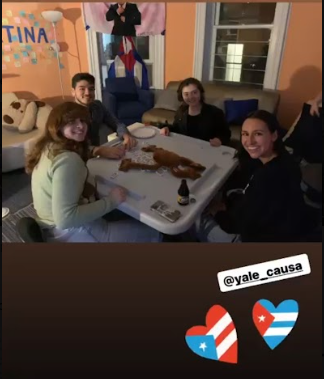
And, of course, one of our yearly traditions returns: the Caribbean Student Mixer. Puerto Rican, Haitian, Dominican, Jamaican, Trinidadian, Cuban, and other Caribbean student communities — one room, music, food, conversation, and hopefully some new collaborations by the end of the night.
The Caribbean makes more sense when we stop studying, organizing, and existing as islands unto ourselves.
Esencia No VaWhat we learned from Cabo Rojo
Earlier this semester, DB hosted a stop on the 2026 Puerto Rico Solidarity Tour, welcoming filmmaker and community organizer Gabo Ramos of Defiende a Cabo Rojo for a screening and conversation about the fight against Project Esencia.
The event went incredibly well — but we walked away from it much more alarmed than we entered.
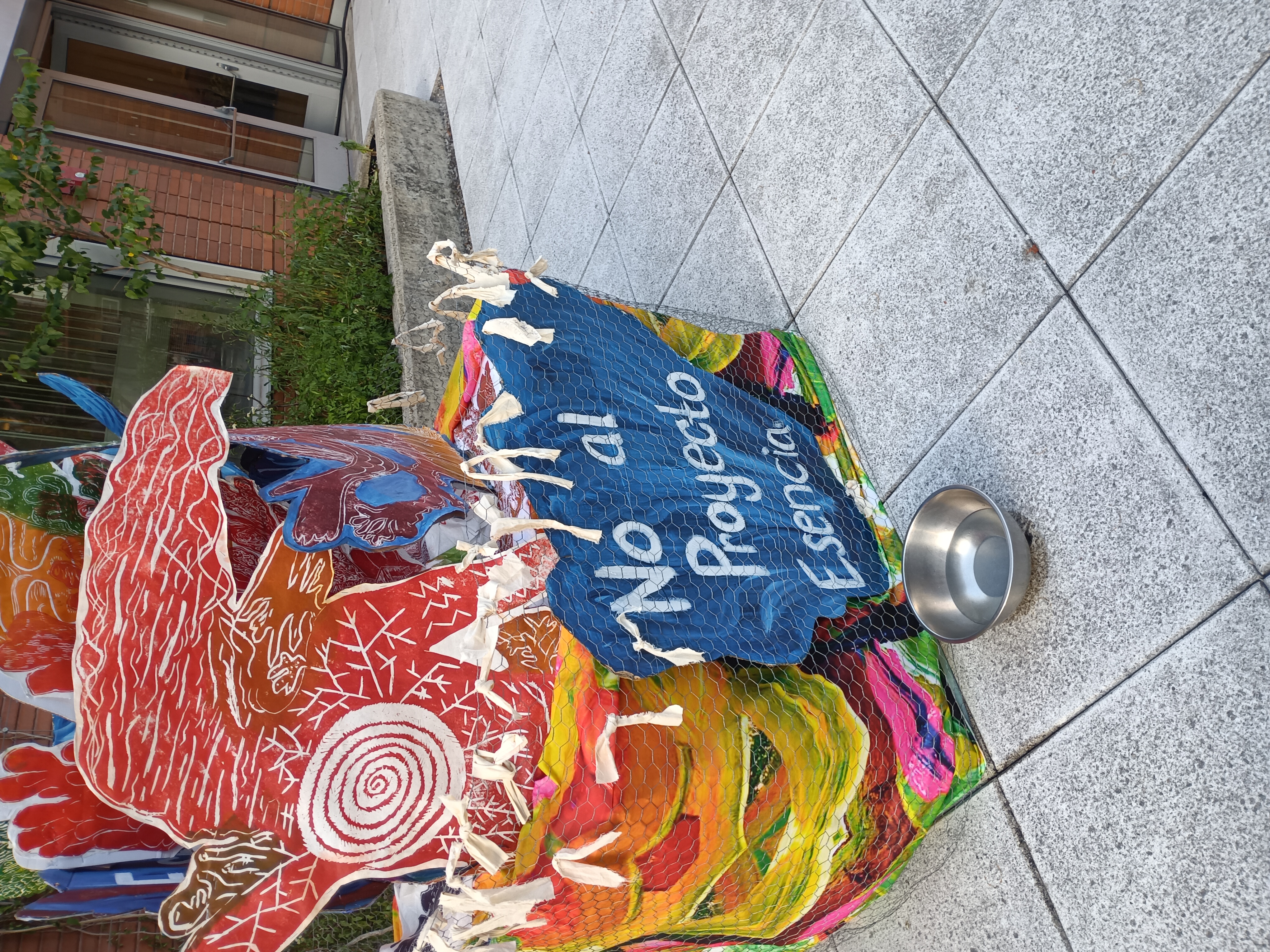
Because Esencia is not simply "another luxury hotel." It is a proposed multi-billion-dollar luxury enclave spanning more than 1,500 acres in Cabo Rojo — hundreds of hotel rooms, roughly a thousand residences, golf, shops, spas — sited in an ecologically sensitive stretch of southwestern Puerto Rico, between major protected areas and near habitats for endangered species. The area also holds numerous documented archaeological sites.
And then there is the water. The project's own environmental documents estimate demand at around 1.5 million gallons per day, in a region that already experiences scarcity. In recent Senate hearings, the Puerto Rico Aqueduct and Sewer Authority acknowledged it currently lacks the capacity to supply that demand, and the Puerto Rico Electric Power Authority has opposed the project as designed.
But what struck us most during the screening was that Esencia is not only an environmental story. It is a story about land, displacement, inequality, and who Puerto Rico is increasingly being built for. Ultra-luxury development does not exist separately from rising property values, privatization pressure, and the growing difficulty working Puerto Ricans face in remaining in their own communities. That is why the opposition has grown from environmental organizations into a broad movement of community groups, scientists, cultural organizations, and Puerto Ricans across the diaspora — thousands marched in Cabo Rojo again in August.
Pay attention to Cabo Rojo.
Project Esencia is a local fight, but the questions underneath it are national ones: Who gets Puerto Rico's land? Who gets its water? Who bears the environmental cost of development? And development for whom?
We are extremely grateful to Gabo Ramos, Defiende a Cabo Rojo, and the Puerto Rico Solidarity Tour for bringing that conversation directly into our space.
Esencia No Va.
Nueva merchTodavía en el taller
You've seen the 2026 design. You've asked about it. Here's where it stands.
Status — en proceso
Still in the workshop 👕
We are still working on the merch. Not because anything went wrong — because we decided it wasn't finished. We're adding a bioluminescent water flow across the design and a few other details we're not ready to show yet. It's going to be worth the wait.
Orders reopen once the final design is locked. We'll announce it here first and on Instagram.
Apoya el movimiento
Everything in this edition — a conference at CENTRO, a certificate proposal, archival research, a museum consultation, a semester of programming for Yale and New Haven — is being built by students with a student budget. Calle Corona showed us what this community can do when it decides to show up. Your support is what lets us keep setting the precedent.
Conductor's wink
Every contribution goes directly toward DB programming, community events, and the projects above.
💚 Donate to Despierta Boricua 💚Mantente conectadoAll lines open
We're everywhere, and we want you in the mix.
- @DespiertaBoricuaYaleInstagram
- Despierta Boricua at YaleFacebook
- despiertaboricua-yale.orgWebsite
- despiertaboricua@yale.eduEmail
- Despierta Boricua at YaleLinkedIn
- All links in one placeLinktree